

Views: 0 Author: Site Editor Publish Time: 2026-05-21 Origin: Site


The rapid growth of the commercial indoor playground sector is not a passing trend. It is a calculated response to changing consumer behaviors. Parents today actively demand safe, screen-free physical activities for their children. This shift counters the alarming average of five to eight hours of daily screen time. Families also seek climate-controlled environments for reliable, year-round entertainment. Meanwhile, traditional retail, hospitality, and standalone entertainment centers face a harsh reality. They frequently suffer from declining foot traffic and shorter customer dwell times. To survive, modern businesses must creatively adapt their physical spaces. An Indoor Soft Playground acts as a strategic anchor to solve this exact problem. By transforming dead square footage into family-friendly infrastructure, you create immediate value. Businesses effectively increase customer retention and boost secondary spend. Ultimately, they weather-proof their revenue models against unpredictable external factors.
Revenue Predictability: Climate-controlled soft play areas eliminate weather-dependent revenue fluctuations, ensuring consistent year-round foot traffic.
Cross-Industry Versatility: Beyond Family Entertainment Centers (FECs), soft play infrastructure is proven to increase dwell time in retail, healthcare, and hospitality settings.
Operational Economics: High ROI is driven not just by ticketing, but by integrating secondary revenue streams (like cafes) and capitalizing on minimal mechanical maintenance.
Inclusive Design Value: Modern soft play equipment supports sensory and vestibular development, broadening the addressable market to families requiring neurodivergent-friendly spaces.
Modern businesses constantly seek reliable foot traffic. An Indoor Soft Playground offers unique commercial advantages over traditional entertainment models. It secures revenue streams while minimizing operational friction.
Outdoor entertainment heavily relies on cooperative weather. Rain, extreme heat, or freezing temperatures instantly destroy daily revenue forecasts. Indoor setups protect your business from these environmental extremes. They provide a comfortable, climate-controlled safe haven for families. This stability allows you to forecast cash flow accurately. You can maintain steady staffing levels without sudden schedule cuts. Consistent daily operations build trust with local families looking for guaranteed weekend activities.
Customer dwell time dictates profitability in commercial spaces. There is a direct correlation between keeping children engaged safely and extending a parent's stay. When kids play happily, parents relax. Longer stays naturally lead to increased spending. Families are far more likely to purchase high-margin items like food, specialty beverages, and retail goods. If a parent can sit comfortably while their child plays, they will order a second coffee. They might even stay for a full meal. This secondary spend often outpaces the initial admission ticket value.
Child-led family decision-making is a powerful psychological driver. Retailers call this phenomenon "pester power." Children heavily influence where a family goes for errands or weekend fun. Businesses offering dedicated, safe play areas quickly become the default choice for young families. If a child begs to visit a specific mall because it has a great play area, the parents will comply. You win the entire family's foot traffic simply by catering to the youngest members.
Traditional amusement parks require expensive engineering maintenance. Mechanical rides break down and need specialized technicians. In contrast, high-density foam and vinyl play structures operate with incredibly low friction. They have no moving motors or electronic belts. Your primary operational requirement is routine daily sanitization.
Wipe down vinyl surfaces with approved non-toxic cleaners.
Inspect netting and foam padding for physical tears.
Rotate loose items like foam blocks to ensure even wear.
Best Practice: Implement a strict daily cleaning checklist. Visible hygiene reassures parents and protects your brand reputation.
The versatility of an Indoor Soft Playground extends far beyond standard amusement parks. Different commercial sectors leverage this infrastructure to solve unique business challenges.
Family Entertainment Centers (FECs) & Trampoline Parks: In these massive facilities, a soft play area acts as a vital anchor. It serves the highly specific 0-5 age demographic. Trampoline courts carry high impact risks. You must safely separate toddlers from energetic teenagers. A dedicated soft play zone provides high-capacity, low-injury-risk entertainment. It ensures families with children of multiple ages can visit together safely.
Retail Malls & Big-Box Stores: E-commerce offers unmatched convenience. Physical retail must offer experiential reasons to visit offline. A play zone serves as a "pseudo-daycare" amenity. It allows parents to shop undistracted. They can browse longer without managing a bored, fussy toddler. This physical amenity directly combats online shopping habits.
Healthcare & Therapeutic Facilities: Medical visits often cause extreme clinical anxiety for pediatric patients. Soft play areas transform sterile waiting rooms into welcoming environments. Beyond distraction, these areas offer real sensory benefits. Modern structures integrate tactile, visual, and auditory elements. They provide essential vestibular and proprioceptive stimulation. This is highly beneficial for children with sensory processing disorders.
Hospitality & Food Service: Restaurants and resorts face fierce competition. Integrated play areas create a powerful competitive moat. Parents prioritize peaceful dining or vacation experiences. A venue offering safe child entertainment commands higher loyalty. Families will return repeatedly to a restaurant where they can actually finish a meal in peace.
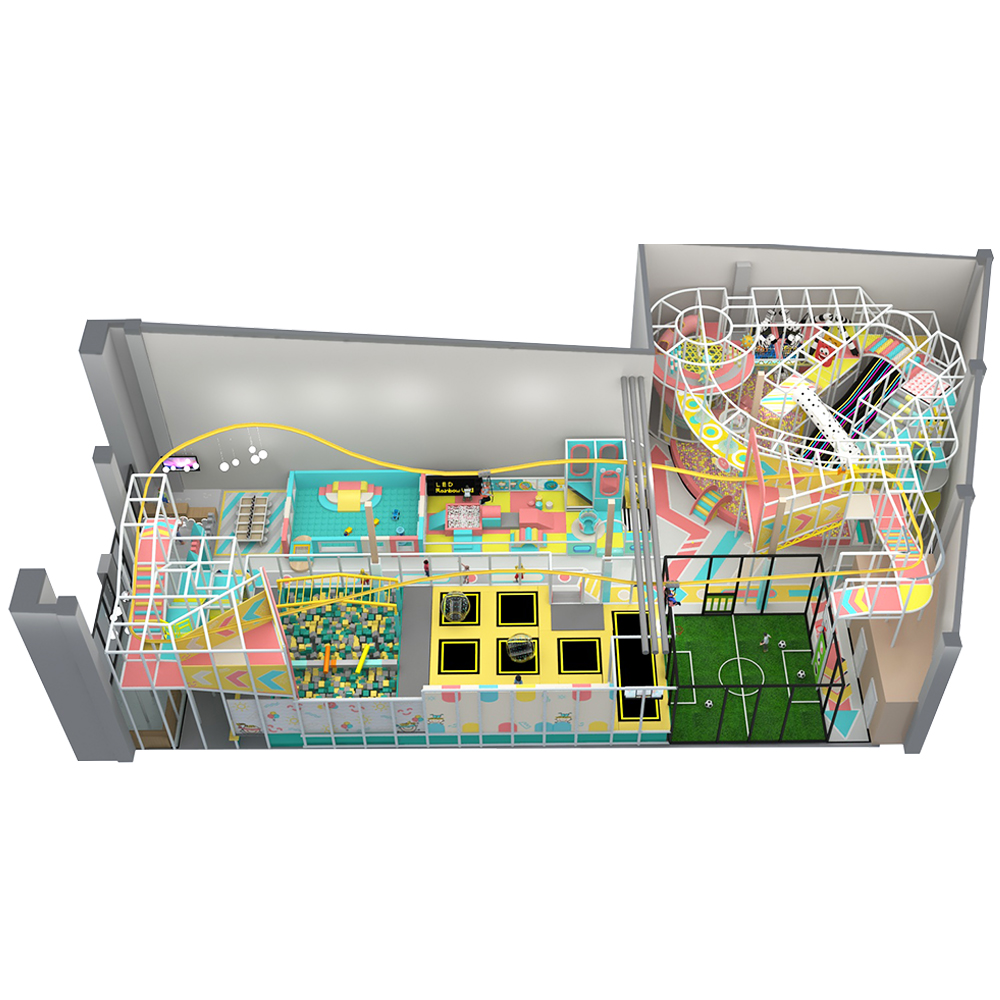
Investors frequently debate between indoor and outdoor playground investments. A commercial evaluation reveals distinct advantages for climate-controlled environments.
Commercial real estate is expensive. Every square foot must generate revenue (坪效). Indoor structures excel at space utilization. Manufacturers custom-engineer these multi-level modular frames. They utilize vertical space efficiently, building upward rather than outward. They can also wrap around awkward architectural corners or support columns. This turns previously dead zones into highly profitable attractions.
Capital expenditure requires a long lifespan for maximum return. Outdoor equipment suffers rapid degradation. UV rays fade bright plastics quickly. Rain and humidity cause metal rust. Extreme temperature shifts crack materials. Indoor soft play equipment avoids all elemental exposure. This protection significantly extends the physical lifespan of the investment. Your vibrant colors remain bright, and structural integrity lasts much longer.
Safety-conscious parents demand secure environments. Outdoor parks are often open, making child supervision difficult. Indoor environments offer superior security controls. You can implement single-point entry and exit gating. This prevents children from wandering off. You can easily install CCTV monitoring across the entire grid. Furthermore, indoor environments allow for stringent sanitation protocols. These controlled factors fundamentally lower your liability risks.
Feature Matrix | Indoor Soft Playground | Outdoor Playground |
|---|---|---|
Weather Impact | Zero impact. Operates 365 days a year. | High impact. Closes during rain, snow, or extreme heat. |
Space Efficiency | High. Utilizes vertical and corner space. | Low. Requires expansive, flat horizontal footprints. |
Security Control | Single-point gated entry, easy CCTV integration. | Open borders, difficult to monitor all exits. |
Material Lifespan | Extended. Protected from UV rays and moisture. | Shorter. Prone to sun fading, rust, and weather cracking. |
Common Mistake: Failing to plan proper seating around the play perimeter. If parents cannot comfortably sit and watch their children, they will leave early, reducing your overall dwell time.
Building the playground is only step one. Profitable scaling requires a deliberate operational framework. You must transition from passive ticket sales to active revenue generation.
Many new operators rely solely on "drop-in" or walk-in admission tickets. This is a fragile strategy. Industry best practices suggest keeping walk-in sales under 15% of your total revenue. Instead, focus heavily on structured packages. Pre-booked party packages offer massive margins. They guarantee a set amount of revenue weeks in advance. Membership subscriptions provide reliable recurring monthly income. Targeted upsells, like premium craft sessions or character meet-and-greets, further expand your baseline profitability.
Never underestimate the power of caffeine in a parental environment. Integrating a cafe is a proven lever to double the average transaction value per family. Position a comfortable seating area directly adjacent to the play zone. Ensure parents have clear sightlines to their kids. Provide fast, free Wi-Fi. Serve high-margin items like espresso drinks, smoothies, and healthy snacks. Parents will gladly pay premium prices for good coffee while their kids burn off energy securely.
Manual administrative work destroys profit margins. You must automate your operations early. The vast majority of parental planning occurs via mobile devices. Implement a mobile-optimized booking system. Parents should be able to reserve a birthday party from their phone in under three minutes. Set up automated email marketing loops. If a user abandons a booking cart, send a follow-up email offering a small discount. Send targeted re-engagement emails to families who haven't visited in 60 days. Automation captures lost revenue effortlessly.
Your manufacturer acts as your foundational business partner. Choosing the wrong vendor leads to compliance failures and safety hazards. Use strict criteria when shortlisting your options.
Safety is non-negotiable. You must ensure vendors provide premium, certified materials. All high-density foams and vinyl covers must be non-toxic and fire-retardant. Require proof that their designs meet rigorous regional safety standards. Look for certifications from ASTM (American Society for Testing and Materials), CE, or TUV. Never accept verbal assurances; demand official testing documentation before signing a contract.
Evaluate a vendor's design flexibility. You want modular scalability. A modular system allows you to add new components later without tearing down the entire structure. This keeps your attraction fresh year after year. Additionally, assess their bespoke theming capabilities. Can they match your corporate colors exactly? Can they design a custom space, jungle, or underwater theme? Brand-aligned aesthetics elevate your facility from a generic room to a premium destination.
Children of different ages exhibit vastly different play styles. A reliable vendor must design clear demarcations within the facility. You need isolated, ultra-soft padding zones strictly for toddlers (0-3 years). This prevents accidental collisions with highly active older children (4-12 years). Older kids require dynamic obstacle courses, steep slides, and climbing walls. Proper zoning keeps everyone safe and ensures every age group finds engaging challenges.
Building an indoor play center is a complex construction project. Prioritize manufacturers who offer true end-to-end "turnkey" services. They should provide initial 3D spatial planning to visualize the layout. They must assist with accurate budgeting. Crucially, they should handle the physical installation using certified crews. Finally, ensure they offer ongoing replacement parts support. You will eventually need replacement netting or fresh padding, and rapid vendor response minimizes equipment downtime.
An indoor soft playground is far more than a simple play area. It is a calculated infrastructure investment. It yields high returns through increased customer dwell time and broad demographic appeal. By providing a safe, climate-controlled environment, you build profound operational resilience. Families will consistently choose your facility over competitors lacking child-friendly amenities.
Your next step requires immediate action. Audit your available commercial floor space today. Assess your local demographic density, paying special attention to families with children aged 0 to 12. Once you identify the opportunity, request a spatial feasibility consultation from a certified commercial playground manufacturer. Transforming your empty space into a profit center starts with a single professional evaluation.
A: Commercial indoor equipment typically lasts between 8 to 15 years. The longevity depends heavily on the durability of the commercial-grade vinyl and foam used. Because the equipment avoids outdoor weather degradation, it survives longer. However, maintaining strict, daily cleaning protocols and immediately repairing minor vinyl tears are essential to reaching this maximum lifespan.
A: You do not need a massive warehouse to see positive returns. Structures are highly customizable. A small corner setup in a cafe can require as little as 200 square feet to keep kids busy. Meanwhile, large multi-level FEC anchors might span 5,000 square feet. ROI depends on maximizing the vertical space available.
A: Yes. You generally need a standard local business license and specialized liability insurance covering amusement facilities. If you integrate a cafe or snack bar to boost secondary revenue, you must also obtain local food-handling permits and health department approvals. Always consult your municipal government for regional zoning laws.

 +971 58 542 5499